eSIM vs Physical SIM Card: Pros, Cons & Which One Is Right for You
Introduction
The humble SIM card has been the backbone of mobile connectivity for decades. But a newer technology — the eSIM (embedded SIM) — is rapidly changing how we connect to cellular networks. Whether you're a frequent traveler, a tech enthusiast, or simply shopping for a new phone, understanding the differences between eSIM and physical SIM cards can save you money, hassle, and headaches.
What is a Physical SIM Card?
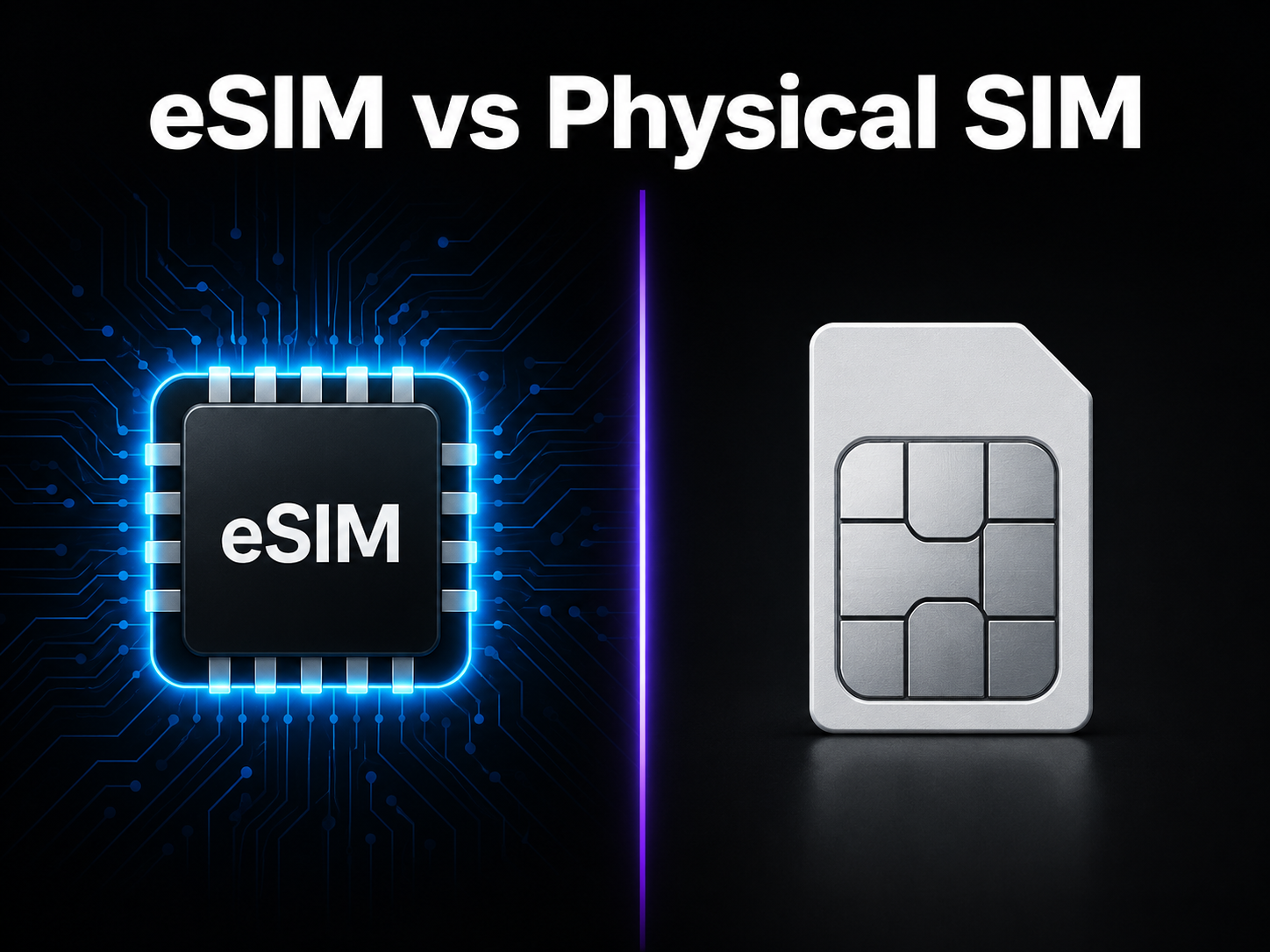
A physical SIM (Subscriber Identity Module) is a small removable chip that stores your carrier information and authenticates your device on a mobile network. It comes in three standard sizes: standard, micro, and nano.
What is an eSIM?
An eSIM is a digital SIM that is permanently embedded in your device. Instead of inserting a physical card, you activate a carrier plan by scanning a QR code or downloading a profile directly to your phone.
Pros of eSIM
- Instant activation: Switch or add carriers in minutes without visiting a store or waiting for a card in the mail.
- Multiple profiles: Store several carrier plans on one device and switch between them easily — perfect for separating personal and work lines.
- Ideal for travelers: Add a local data plan abroad without removing your home SIM or buying a physical card.
- More durable: No physical card means no risk of the SIM getting lost, bent, or damaged.
- Slimmer device design: Removing the SIM tray gives manufacturers more room for larger batteries or a more compact build.
- Better water resistance: No SIM slot means one less opening that water and dust can get through.
Cons of eSIM
- Limited carrier support: Not all carriers — especially in developing regions — support eSIM yet.
- Harder to switch devices quickly: Transferring an eSIM profile between phones requires going through your carrier, unlike just popping out a SIM card.
- Device dependency: If your phone breaks and you need a temporary replacement, it may not support eSIM.
- Privacy concerns: Digital profiles may leave a clearer data trail compared to anonymous prepaid physical SIMs.
Pros of Physical SIM
- Universal compatibility: Works with virtually every carrier worldwide, including smaller regional providers.
- Easy device swapping: Simply pop the SIM into any compatible phone to transfer your number and plan instantly.
- Widely available: Prepaid physical SIMs can be bought at airports, convenience stores, and supermarkets around the world.
- Privacy-friendly options: Prepaid physical SIMs can be purchased anonymously in many countries.
Cons of Physical SIM
- Easy to lose or damage: These tiny chips are easy to misplace, especially when switching between devices.
- Slower switching: Changing carriers requires obtaining and inserting a new card, sometimes involving a store visit.
- Takes up device space: The SIM tray adds bulk and creates openings that can affect water resistance ratings.
- Limited to one carrier at a time: Unless your phone has dual SIM trays, you can only use one carrier simultaneously.
Which should you choose?
Choose eSIM if you travel frequently, want the flexibility of multiple plans, own a recent flagship smartphone, or prefer a cleaner, simpler setup. Choose a physical SIM if you need broad carrier compatibility, frequently swap devices, or are in a region where eSIM support is still limited.
The bottom line
Both eSIM and physical SIM cards serve the same fundamental purpose — connecting you to a mobile network — but they do so in meaningfully different ways. As eSIM adoption grows worldwide, it is gradually becoming the preferred choice for modern smartphones. However, the physical SIM remains an indispensable option for many users. The best choice ultimately depends on your device, your carrier, and how you use your phone.